How to Use a Port USB Key in China (Single Window) — Step-by-Step Guide

To export goods from China legally, companies must use a Port USB Key to access the Chinese government platform Single Window (China International Trade Single Window).
This guide explains how to install drivers, log in to the system, and grant access to your logistics partner so they can submit export declarations on your behalf.

What Is a Port USB Key in China?

A Port USB Key is a hardware security device used to access the official Chinese customs and trade platform Single Window (中国国际贸易单一窗口).

Through this system, companies can:

  • submit export declarations;
  • handle customs clearance documents;
  • manage logistics and shipping data;
  • authorize logistics companies to act on their behalf.

Without a properly configured USB key, export procedures in China cannot be completed.

System Requirements for Using a Port USB Key

Before starting, make sure the following requirements are met:

  • A Windows-based computer is required (macOS is not supported);
  • Official USB key drivers must be installed;
  • A high-quality USB cable should be used (preferably the original one).

⚠️ Poor-quality USB cables often cause connection errors and login failures.

Step-by-Step Guide: How to Log In to Single Window

Step 1. Open the Official Website
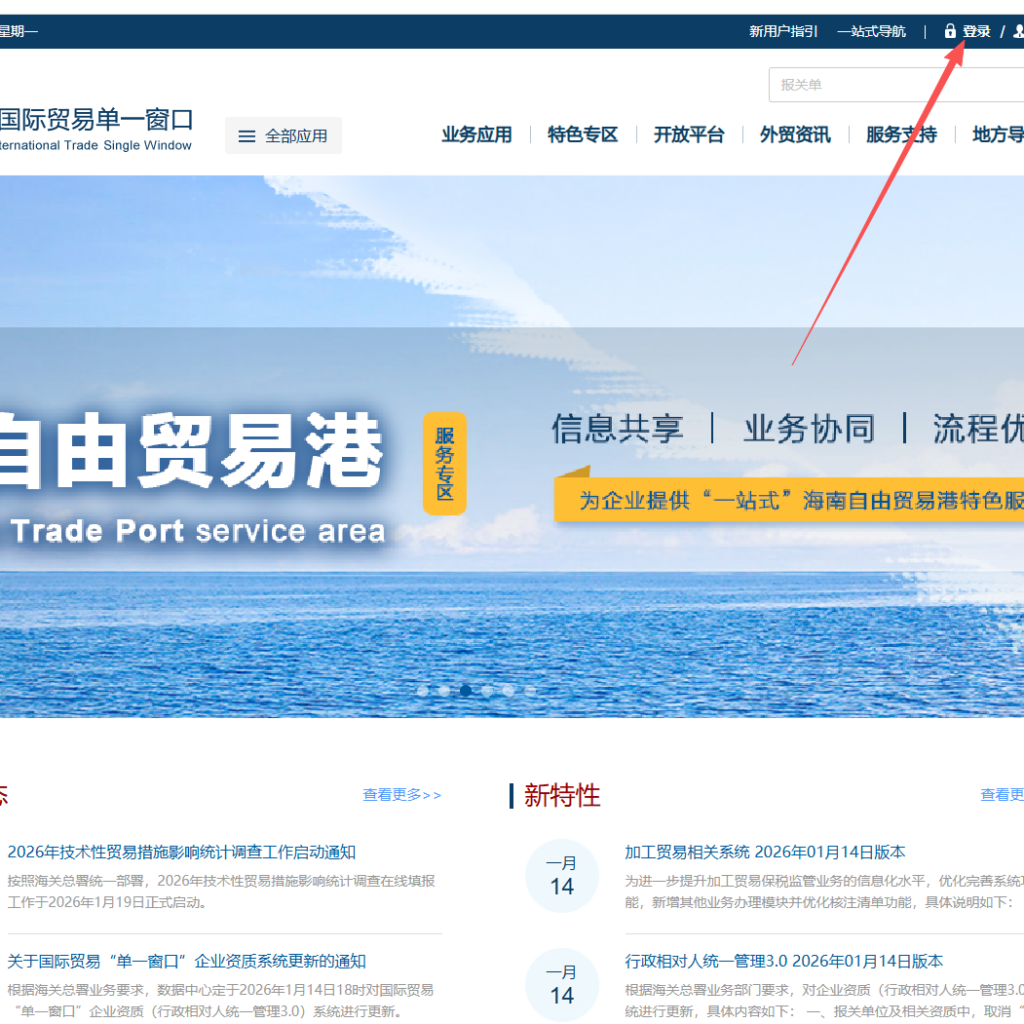
Go to the official Single Window platform:
https://www.singlewindow.cn/

Step 2. Insert the USB Key
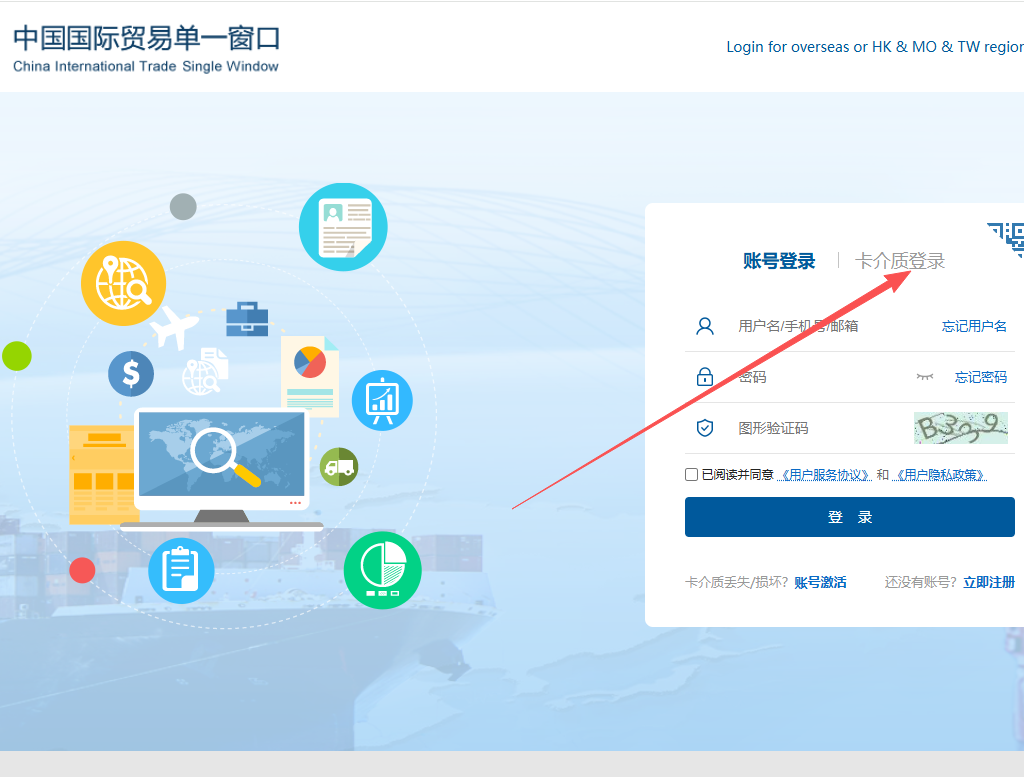
Connect the Port USB Key to your computer.

Step 3. Install Drivers
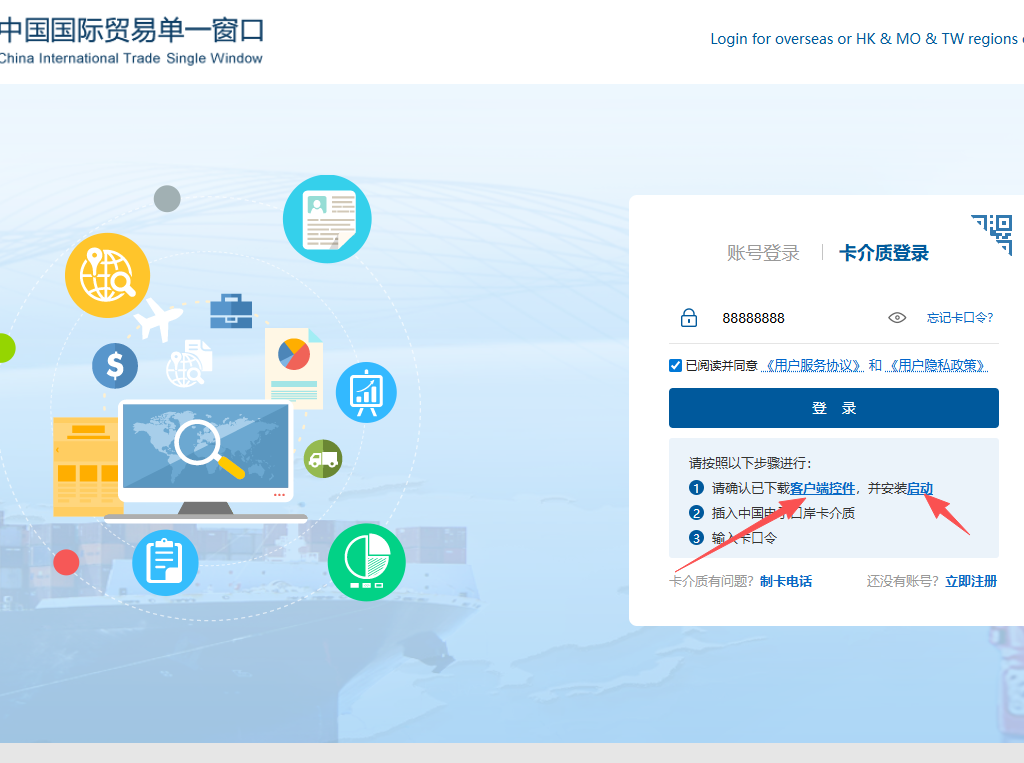
Download and install the required drivers for the USB key.
After installation, restart your computer.

Step 4. Log In to the System
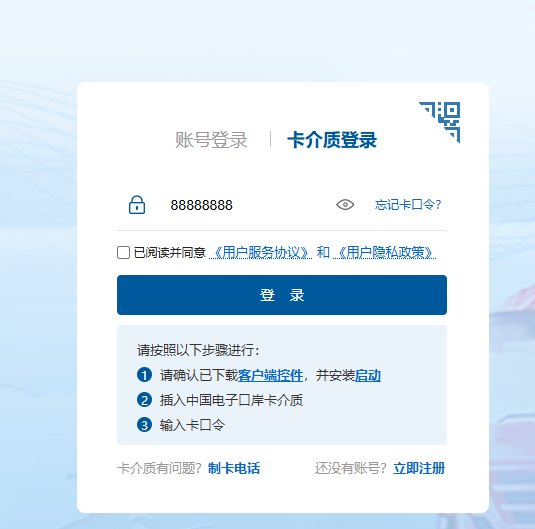
Log in to the Single Window system.
Default password: 88888888

How to Grant Access to a Logistics Company

If you want your logistics or transportation partner to submit export declarations on behalf of your company, you must grant them access in the Single Window system.
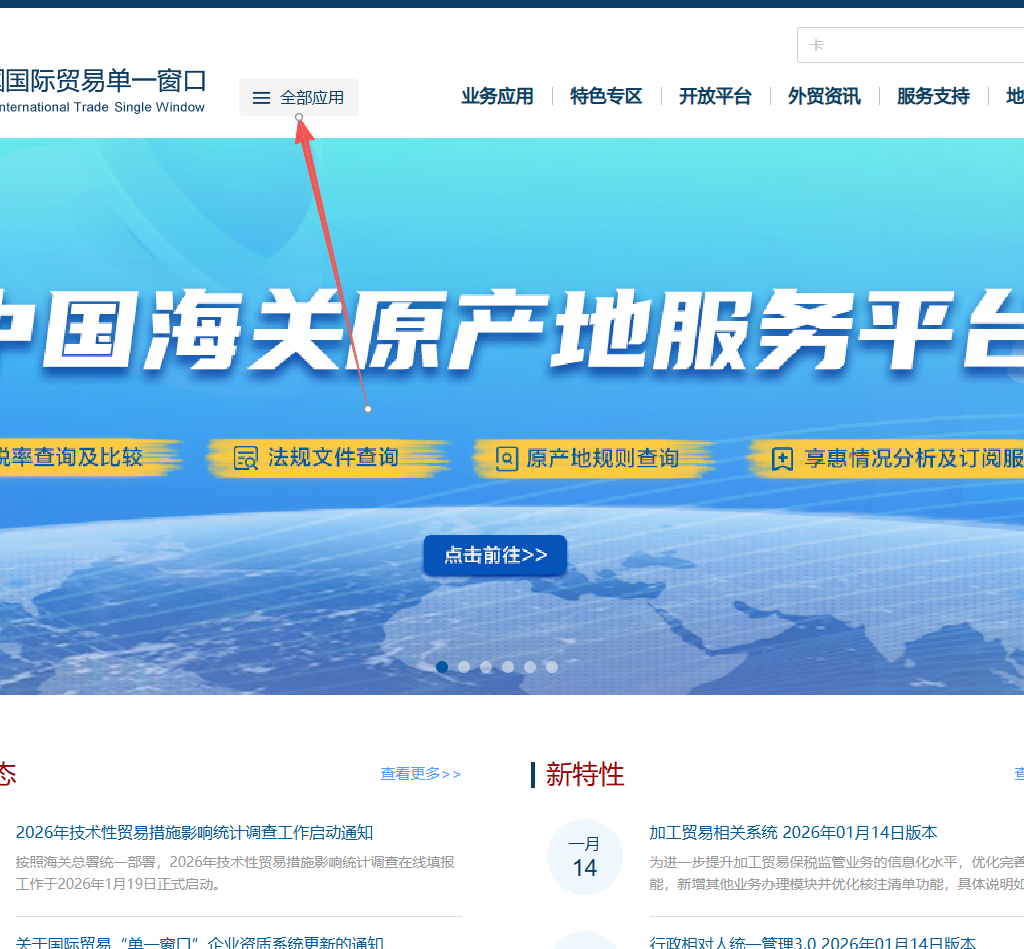
Access Authorization Process:

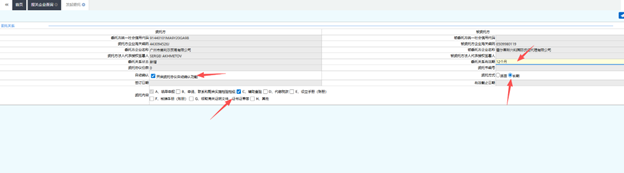
  1. Open the relevant menu section (see screenshots).
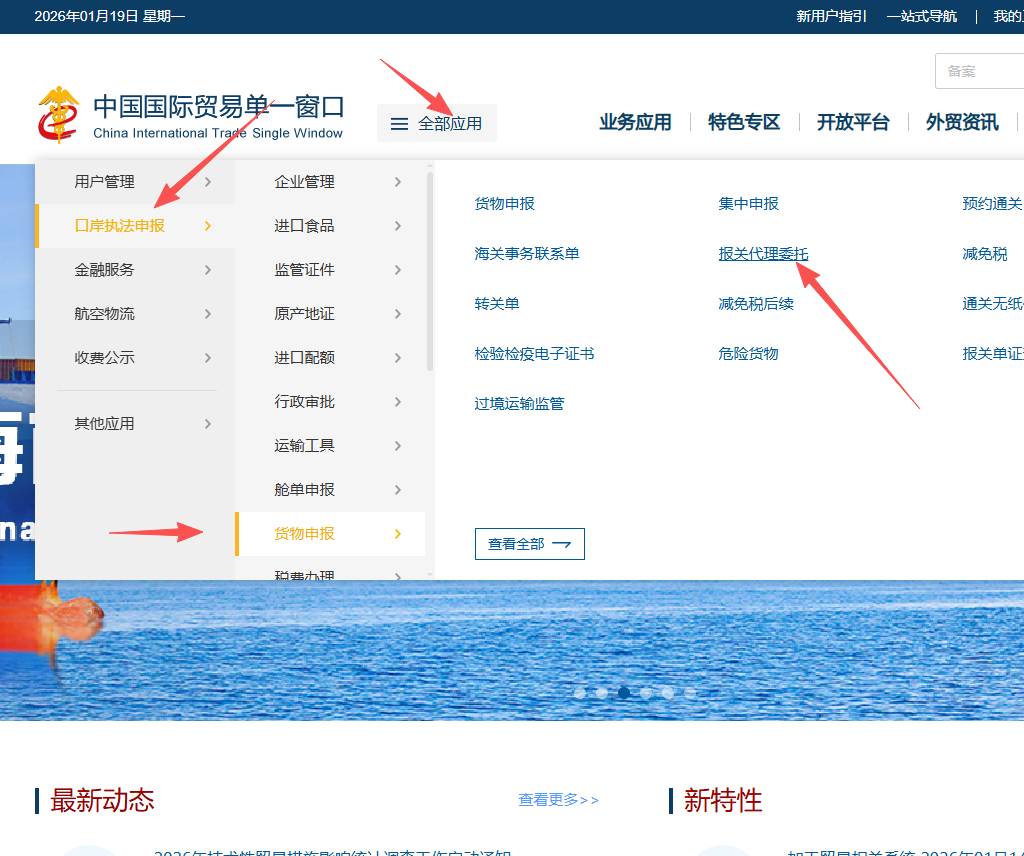
  1. Follow the on-screen instructions step by step.
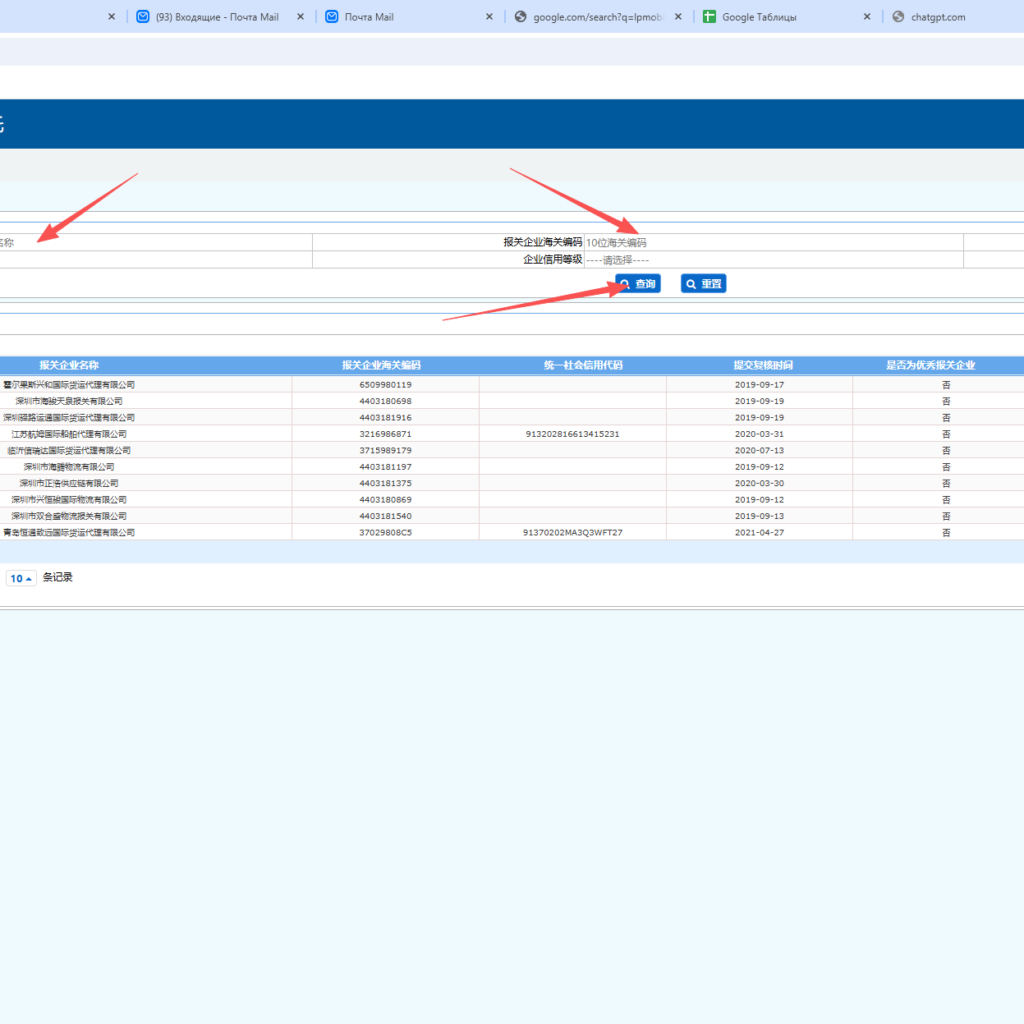
  1. Enter your logistics partner’s company information.
  2. Confirm and save the access settings.

Setting Access Rights and Permissions

You can configure the level of access for your logistics partner manually.
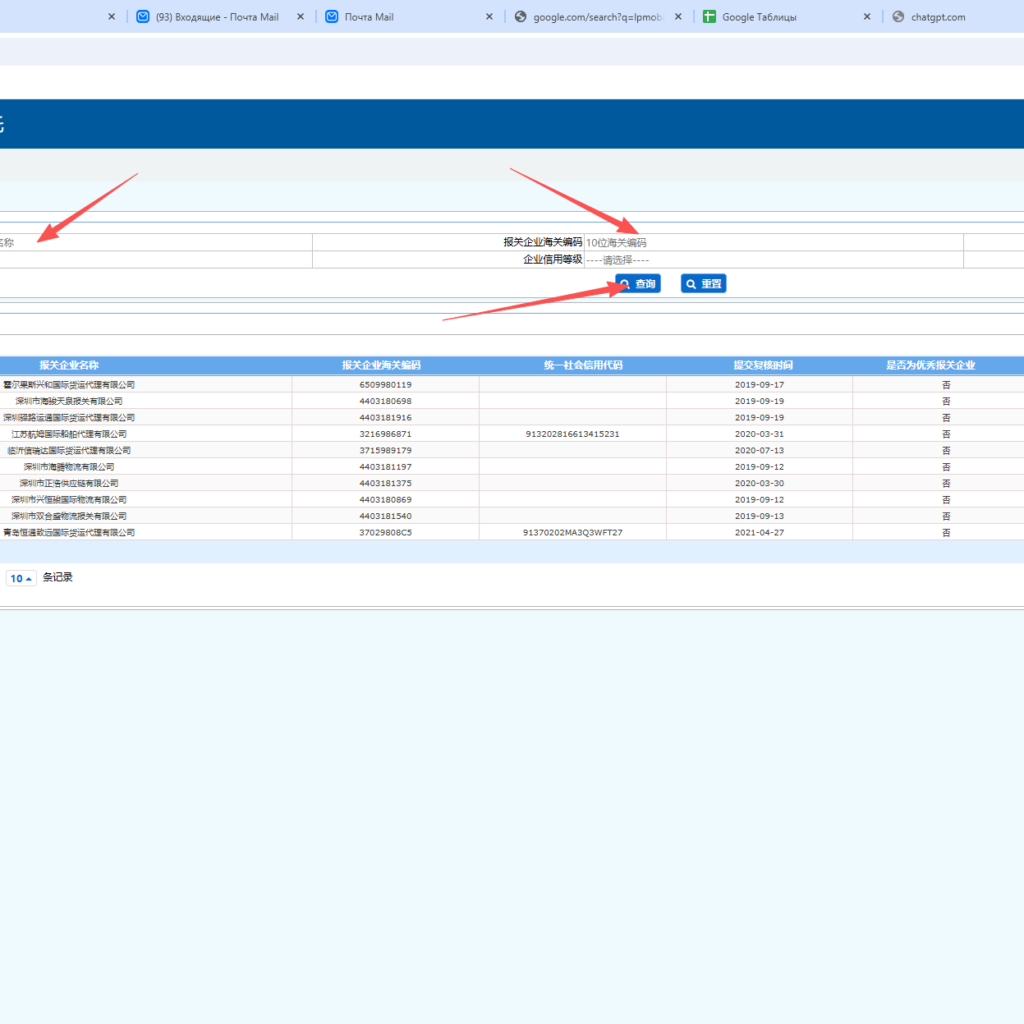
In most cases, a standard access configuration is used, which allows:
  • submission of export declarations;
  • access only to necessary operational modules;
  • no access to sensitive corporate data.
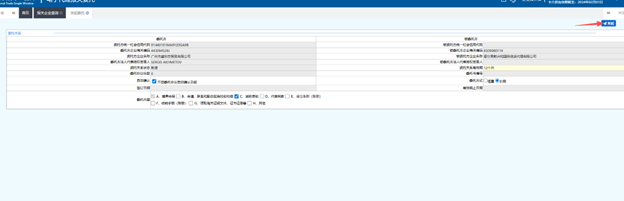
Result: What Happens After Access Is Granted

Once the setup is completed:

  • your logistics company receives official access to the Single Window system;
  • your transport partner can file export declarations on behalf of your Chinese company;
  • export operations become fully compliant and risk-free.

Common Mistakes When Using Port USB Keys

  • trying to use macOS instead of Windows;
  • skipping the system restart after driver installation;
  • using low-quality or damaged USB cables;
  • incorrect access permission settings for logistics partners.

Conclusion

Proper configuration of the China Port USB Key and the Single Window system is a mandatory step for exporting goods from China.
When set up correctly, it allows your logistics partner to handle customs and export declarations smoothly and legally.

Understanding Registered Capital in China: A Guide for Foreign Entrepreneurs

If you’re planning to open a company in China, one of the first things you’ll hear about is registered capital. It appears on every business license and plays an important role in how your company is viewed by the authorities, potential partners, and even banks.

But what exactly is registered capital — and how does it affect your business in China?

Let’s break it down in simple terms.


What Is Registered Capital?

Registered capital is the amount of money that the company’s owners (or shareholders) commit to invest in the company over time. It’s not something you need to pay immediately. In fact, under China’s current rules, you have up to 5 years to inject the full amount.

This rule was updated in 2024. Previously, companies were allowed up to 50 years to inject their capital. The reduced 5-year limit is now standard for all new companies.


Is Registered Capital the Same as Paid-Up Capital?

Not quite. In many countries, like Germany or Singapore, paid-up capital must be deposited into the company’s account before the company is even registered. In China, however, registered capital is more like a formal promise — an obligation to invest that amount over a set time period.


Do You Need to Inject the Capital Right Away?

No. You can start a company with zero actual capital injected — and even apply for a work visa under that company. As long as you meet the other visa requirements and promise a reasonable amount of registered capital, you’re within your rights.


Why Does Registered Capital Matter?

Even though the money doesn’t have to be injected immediately, the amount you declare still matters. That’s because it:

  • Determines your limited liability
  • Shows your company’s financial credibility
  • Is public information that potential partners and suppliers can check

For example, if you declare registered capital of 100,000 USD, that’s the maximum amount you are legally responsible for if the company runs into financial or legal trouble. Your personal assets are protected beyond that.


How Much Should You Declare?

It depends on your goals.

If you plan to operate a small consulting business, a modest amount may be fine. But if you want to work with larger partners, such as Alibaba, JD.com, or Xiaomi, you’ll need to declare a higher registered capital — usually 1 to 5 million yuan or more.

Big companies often won’t even consider working with a company that shows a small registered capital. They see it as a red flag about your commitment and financial backing.


What Happens If You Don’t Inject the Capital?

After 5 years, if you haven’t met your promise, the government will ask you to:

  1. Inject the full amount
  2. Reduce the registered capital to a more realistic figure
  3. Close the company

You must choose one of the three options — no exceptions.


How Do You Inject the Capital?

This part can be tricky if you’re not familiar with the process.

You can’t use your daily business account for this purpose. Injecting capital into your main account will be treated as income — not capital.

Instead, you need to open a special capital injection account, which must be approved by China’s central bank. This process usually takes 2 to 3 months, but it can be done remotely without the company owner being in China.


Where Must the Funds Come From?

Registered capital must be sent from outside of China, in foreign currency. You have two options:

  • If you’re an individual shareholder, send funds from your personal overseas bank account.
  • If your company is owned by a foreign corporate entity, inject the funds from that entity’s corporate account abroad.

You cannot send registered capital from a Chinese account unless you hold permanent residency (a green card) in China.


Final Thoughts

Registered capital in China may seem like a small detail, but it plays a big role in shaping your company’s legal and financial structure.

Choosing the right amount, understanding your responsibilities, and using the correct account are all key to staying compliant — and building a trustworthy brand.

If you’re planning to register a company in China, make sure you’re working with someone who understands current, practical rules, not outdated information from 10 years ago.

Need help? We register companies in China every day and guide foreign entrepreneurs through the entire process — from choosing registered capital to opening bank accounts and applying for work permits.

Contact us for a consultation — and set up your business in China the right way.

Work Permit Categories in China: A, B, and C — What’s the Difference?

If you’re planning to work in China, it’s important to know that a work visa (Z visa) alone is not enough.
After entering the country, you must obtain a Work Permit.

China classifies foreign professionals into three categories: A, B, and C.
This system helps the government manage the flow of foreign talent based on qualifications, experience, and market demand.

Let’s take a closer look at which category might apply to you.


🥇 Category A — High-Level Talents

Category A is considered a “fast track” for top-tier professionals.
This group includes individuals who:

  • Hold a master’s degree or higher
  • Earn at least 450,000 RMB per year
  • Have received international recognition or awards (e.g. patents, publications, participation in global projects)
  • Score high on China’s points-based evaluation system

Benefits of Category A:

  • Fast-track application processing
  • Simplified renewal process
  • Priority access to permanent residency

🥈 Category B — Skilled Workers

This is the most common category for foreign professionals.
You may fall under Category B if you:

  • Hold a bachelor’s degree
  • Have at least 2 years of relevant work experience
  • Work in one of China’s priority industries (such as education, IT, engineering, or finance)

Typical salary thresholds start at around 150,000 RMB per year, depending on the region.


🥉 Category C — Entry-Level & Temporary Work

This category is suitable for:

  • International students who recently graduated from Chinese universities
  • Interns or young professionals under 30
  • Seasonal workers and participants in short-term programs

⚠️ Keep in mind:
Category C permits are harder to renew and are typically granted for limited durations.
However, it’s a great entry point for those starting their journey in China.


🧭 How to determine your category?

Your classification depends on your education, age, work experience, documents, and salary.
If you’re unsure where you fit — we can evaluate your profile and help prepare the correct documents.


✅ We guide you through the entire process — from company setup to final Work Permit issuance.

Contact us to learn how to legally and efficiently obtain a work visa in China — with zero stress.

Taxes for Foreigners in China in 2025: What You Need to Know

If you’re living or working in China, it’s essential to understand how the local tax system works. Even if your employer pays your taxes, you are still legally responsible—especially if you earn additional income beyond your salary.

In this article, we’ll explain:

  • Who qualifies as a tax resident in China
  • What income tax rates apply in 2025
  • What to keep in mind if you earn income from rent, investments, or dividends

🧾 Your Tax Status in China

It depends on how long you stay in the country:

  • Non-resident – If you stay in China less than 183 days per year, you only pay tax on China-sourced income.
  • Tax resident – If you stay in China 183 days or more, you’re subject to tax on worldwide income—but only after 5 consecutive years.

👉 For the first 5 years, only income earned in China is taxed.
Once you exceed 5 years, global income becomes taxable—unless you reset the clock by leaving China for at least 30 days per year.


💸 Income Tax for Foreigners in 2025

Since 2019, China’s Individual Income Tax (IIT) has used a progressive tax scale.
The first ¥5,000/month is tax-free as a standard deduction.

🔢 Monthly Tax Rates in 2025:

Taxable Monthly IncomeTax RateQuick Deduction
Up to ¥3,0003%¥0
¥3,001 – ¥12,00010%¥210
¥12,001 – ¥25,00020%¥1,410
¥25,001 – ¥35,00025%¥2,660
¥35,001 – ¥55,00030%¥4,410
¥55,001 – ¥80,00035%¥7,160
Over ¥80,00045%¥15,160

📌 Example: If you earn ¥15,000/month:

  • Subtract the ¥5,000 tax-free allowance → ¥10,000 taxable
  • Apply 10% rate → ¥1,000
  • Subtract quick deduction (¥210) → ¥790 tax per month

🏠 Taxes on Other Types of Income

Foreigners in China are also taxed on various non-salary income:

Income TypeTax RateNotes
Property rental20%Deductions may apply
Property sale3–5%Tax on the transaction amount
Dividends & interest20%Withheld at source, usually automatic
Royalties20%Depends on total earnings and deductions

🧑‍💼 Who Is Responsible for Paying the Tax?

  • If you’re employed, your employer calculates and withholds your taxes.
  • If you earn rental income, dividends, or freelance income, you must file a personal tax return and pay taxes yourself.

Conclusion

China’s tax system is not overly complex once you understand its structure.
The key is to:

  • Know your tax residency status
  • Track your stay duration
  • Keep proper documentation

This is especially important if you plan to live in China long-term or grow your business here.

If you’ve just relocated or want to optimize your taxes legally, feel free to reach out — we offer expert consultations and full accounting support.

What Is a Dual-Purpose Office?

A dual-purpose office is a space that serves two functions at the same time:

  1. ✅ As an official business address — used for company registration, tax filings, and immigration purposes;
  2. ✅ And as your residential address — where you actually live or are officially registered to reside.

🔍 Why is it important?

In China — especially in cities like Guangzhou — when applying for:

  • A work visa (Z visa)
  • A work permit
  • Or registering a company

you are usually required to provide:

  • A business office address, and
  • A separate residential address

👉 This can be costly and complicated.
A dual-purpose office allows you to use a single location for both, which reduces costs and simplifies paperwork.


🧾 Example:

You rent an apartment or a room in a business complex that can be legally registered as both:

  • A company office (with an official lease for business purposes)
  • And your living address (with a residential lease for immigration)

This setup is especially popular for foreign entrepreneurs or freelancers starting out in China.

4o

Вы сказали:

Офис двойного назначения — это помещение, которое одновременно используется как жилое пространство (для проживания) и как коммерческий офис (для регистрации компании и ведения бизнеса). Такой формат особенно популярен среди иностранных предпринимателей в Китае, которые: Хотят сэкономить на аренде, Приезжают в страну на короткие сроки, Или только начинают бизнес и не нуждаются в полноценном офисе. 📌 Особенности офисов двойного назначения: ✅ Жильё и офис в одном — можно жить и работать в одном помещении ✅ Подходит для регистрации компании — если здание это позволяет ✅ Можно оформить рабочую визу — при наличии корректного договора аренды ✅ Экономия — аренда одного помещения вместо двух ✅ Удобно для малого бизнеса или ИП ⚠️ Важно учитывать: Не все здания в Китае позволяют одновременно жить и вести бизнес. В некоторых случаях инспекции могут проверять, как выглядит помещение (не должно быть видно кровати в главной комнате). Нельзя использовать любое жилое помещение — только те, которые официально допускаются к коммерческой регистрации. 💡 В Гуанчжоу есть конкретные здания, где легально разрешено совмещать офис и жильё. Мы знаем, какие именно — и поможем найти оптимальны

ChatGPT сказал:

A dual-purpose office is a space that functions both as a residential area (for living) and a commercial office (for company registration and business operations).

This setup is especially popular among foreign entrepreneurs in China who:

  • Want to save on rent
  • Are staying in China for short periods
  • Or are just starting their business and don’t need a full-sized office

📌 Key Features of Dual-Purpose Offices:

Live and work in the same space
Suitable for company registration — if the building is approved for mixed-use
Eligible for work visa application — with a properly structured lease contract
Cost-effective — rent one space instead of two
Ideal for small businesses or freelancers


⚠️ Important Considerations:

  • Not all buildings in China allow both residential and commercial use
  • In some cases, inspectors may visit and check the layout (e.g., no visible bed in the main room)
  • You can’t use just any apartment — only those officially approved for business registration

💡 In Guangzhou, there are specific buildings where mixed-use is legally permitted. We know which ones — and can help you find the optimal solution.й вариант.

Virtual Offices in Guangzhou: How They Work and When They’re a Good Fit

In most cases, it’s a small room (sometimes just 2×3 meters) with basic furniture.
However, the lease contract officially states a space of 30 square meters or more, which is important for:

  • Company registration
  • Work visa applications
  • Passing inspections by tax and immigration authorities

Benefits of a Virtual Office

  • Low cost — prices start at around ¥10,000 per year
  • Located in business centers — builds credibility and trust
  • Access to shared infrastructure — meeting rooms, kitchen, printers
  • Scalable — easy to upgrade to a full office in the same building
  • Supports visa processing — if documents are correctly prepared

⚠️ Important Limitations

  • Not all banks accept virtual offices for opening corporate accounts
  • Some tax authorities may require photo/video proof of the space
  • Not suitable for companies with staff working onsite daily

💡 We know which buildings in Guangzhou pass inspections and where it’s safe to register your company — with minimal risk of rejection.


🧑‍💼 Who Typically Uses Virtual Offices?

  • Startups and freelancers launching in China
  • Companies with remote or overseas teams
  • Foreign company representatives
  • Temporary project teams (e.g., trade shows, sourcing missions)

Conclusion

A virtual office in Guangzhou is not a loophole — it’s a smart, legal tool for starting your business in China.
The key is to choose a verified location, structure the lease properly, and meet all requirements for visas, banks, and compliance.

Taxpayers in China: The Difference Between Small-Scale and General Taxpayer Status

Taxpayers in China: The Difference Between Small-Scale and General Taxpayer Status

When registering a company in China, one of the most important decisions is choosing the type of VAT taxpayer:

  • Small-Scale Taxpayer (小规模纳税人)
  • General Taxpayer (一般纳税人)

Each status has its own rules, benefits, and obligations. Here’s a clear breakdown:


1. Small-Scale Taxpayer (小规模纳税人)

Who it’s for:

  • Small businesses or startups
  • Annual taxable sales under 5 million RMB

VAT Rate:

  • Usually 3% (flat rate, no VAT credit or deduction)

Features:

  • Simple accounting
  • No need to issue VAT special fapiao (invoices) on your own (tax bureau issues on request)
  • Cannot deduct input VAT (you pay VAT on total sales, not net of purchases)

Pros:

  • Easy to manage
  • Lower compliance requirements
  • Good for service-based or early-stage businesses

Cons:

  • Not attractive for B2B clients (they can’t deduct your VAT)
  • Limits your ability to issue full VAT invoices

2. General Taxpayer (一般纳税人)

Who it’s for:

  • Companies with higher turnover or working with corporate clients
  • Required if annual revenue exceeds 5 million RMB
  • Or voluntarily apply if proper accounting systems are in place

VAT Rates (as of 2025):

Type of BusinessVAT Rate
Services (e.g. design, IT)6%
Manufacturing13%
Import/export & logistics9–13%

Features:

  • Must maintain full bookkeeping
  • Can deduct input VAT (tax already paid on purchases)
  • Can issue VAT special fapiao (very important for clients)

Pros:

  • Attractive for B2B clients
  • Can reclaim VAT on business expenses
  • Necessary for large-scale or export businesses

Cons:

  • Stricter compliance
  • More frequent tax filings
  • Requires dedicated accounting team or external support

How to Choose?

CriteriaSmall-ScaleGeneral Taxpayer
Annual Sales< ¥5 million> ¥5 million (or voluntary)
VAT Deduction❌ Not allowed✅ Allowed
Invoice TypeBasic invoices onlyFull VAT invoices
ComplexityLowHigh
Suitable forFreelancers, startupsExporters, B2B firms

Conclusion

If you’re just starting out and want to keep things simple, small-scale status may be enough.
But if you plan to grow, work with corporate clients, or export goods — general taxpayer status gives you far more flexibility and tax efficiency.

Need help choosing or upgrading your VAT status? Let us guide you through the best option for your business in China.